Does Homeowners Insurance Cover Mold Remediation?
Last reviewed 2026-10-30
Sometimes. State insurance regulators and the industry group Triple-I describe the same general rule: a homeowners policy may pay for mold when it results from a sudden, accidental event the policy covers, such as a burst pipe, but usually not when it comes from a slow leak, ongoing humidity, poor maintenance or a flood. “Mold damage is covered if it is due to a covered event,” New York’s Department of Financial Services says, adding that “many policies have a mold limitation for the payment of remediation services.” Policies differ by company and by state, so the only real answer is in your own policy: check it and ask your insurer.
This page is general information, not legal or insurance advice.
Covered causes vs common exclusions
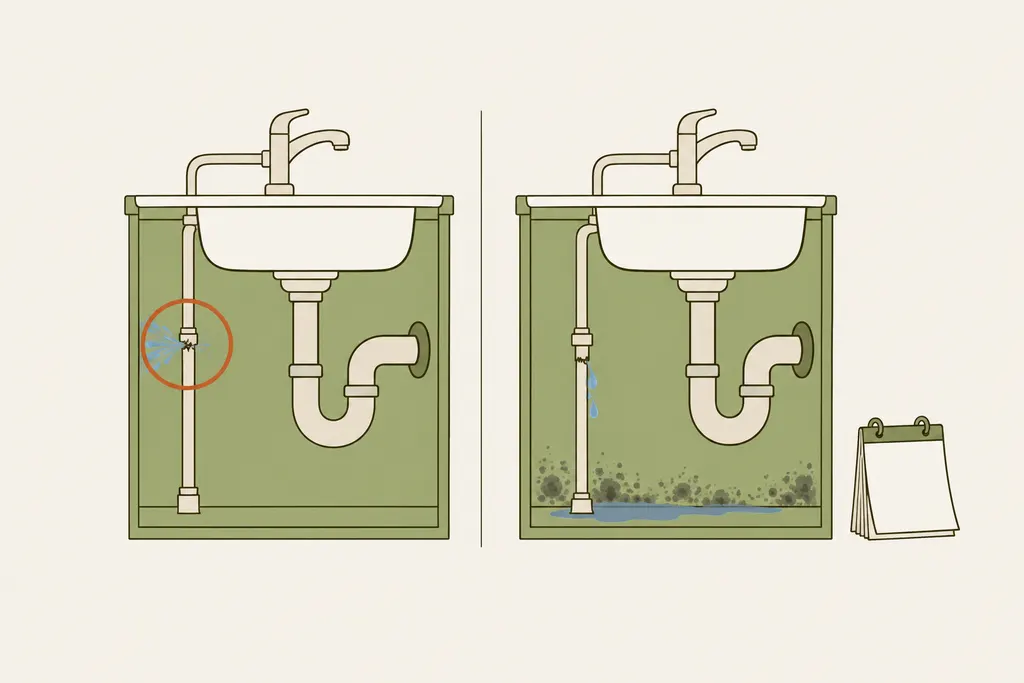
| Situation | What regulators and Triple-I say |
|---|---|
| Sudden water damage (burst pipe, toilet overflow, broken washer hose) | Texas Department of Insurance (TDI): most homeowner and renters policies cover sudden and accidental water damage; “if mold develops on a damaged item, it would be covered.” Triple-I: if mold “is the direct result of a covered peril such as a burst pipe, the cost of eliminating the mold may be covered.” |
| Slow leaks and seepage | TDI: most home policies don’t cover damage from gradual leaks or seepage, “and that includes damage from mold.” California’s Department of Insurance lists “water damage cause[d] by seepage or leaks” and mold among perils generally not covered. |
| Maintenance, humidity, neglect | Triple-I: “Mold, like rot and insect infestation, is a home maintenance issue and these are generally not covered by standard homeowners insurance policies.” California lists neglect and “wear and tear or maintenance” as generally not covered. |
| Flood | TDI: “Mold from a flood would not be covered because home policies don’t cover floods. You would need a separate flood policy.” Triple-I: federal flood insurance may cover mold or mildew damage, “but only if it is directly attributable to a flood.” |
| Mold itself, as a category | NAIC: “homeowners policies often exclude covering the cost of damage from mold.” |
What the policy wording can look like
Triple-I publishes a sample of a standard policy form from ISO, the “Homeowners 3 – Special Form” (HO 00 03, 2000 edition). Its list of excluded causes includes “mold, fungus or wet rot,” followed by an exception: “However, we do insure for loss caused by mold, fungus or wet rot that is hidden within the walls or ceilings or beneath the floors or above the ceilings of a structure if such loss results from the accidental discharge or overflow of water or steam” from a plumbing, heating, air conditioning or fire sprinkler system or a household appliance.
That’s a sample of an older edition and your policy may differ, so look for the words “mold,” “fungi” or “fungus” in your own policy and endorsements.
Mold limits and endorsements
Even when mold is covered, the payment may be capped. Examples from state agencies:
- New York: “Many policies have a mold limitation for the payment of remediation services. Your policy has to be reviewed for the specific language.” (DFS)
- Texas: “Most home policies don’t include mold cleanup and testing after a damaged item is removed.” Your insurer may let you add coverage for cleanup caused by a covered loss; TDI lists mold removal among common endorsements.
- Florida: the state’s consumer guide describes two mold endorsements. A property endorsement can raise the mold coverage limit to $25,000 or $50,000 (insurers may offer other limits), and a liability endorsement pays for claims from others that you may be held liable for because of mold in your home.
For scale, This Old House (data mostly from Angi) puts the average professional mold remediation at about $2,300, most jobs at $1,200–$3,750, and whole-house remediation at $10,000–$30,000. See mold remediation cost for the breakdown by location and size.
What to document before you file a claim
Texas’s insurance regulator (TDI) gives these tips for water damage claims. Your own policy sets the reporting deadline and other duties after a loss, so check it.
- Tell your insurer as soon as possible. In Texas, TDI says you usually must report water damage that was hidden from view within days after you first see it.
- Photograph or video the damage before making any repairs, and make a list of damaged property.
- Don’t throw away damaged items until the adjuster has seen them — for example, a moldy carpet and pad.
- Make only temporary repairs to prevent more damage, and keep receipts. TDI warns that the insurer might deny your claim if you make permanent repairs before it sees the damage.
For mold specifically, This Old House notes that “certain insurance policies may require third-party inspections before covering claims.” In Texas, TDI’s mold claim tips say to make sure the mold professional has a state license, that “you’ll need an inspection to show that mold was removed and that you fixed the problem that caused it,” and that mold professionals must provide a certificate that the mold was removed. Licensing rules vary by state; ask your insurer what it needs. A mold inspection can document the extent and the moisture source.
Questions to ask your insurer
- Does my policy exclude mold or fungi? Is there an exception for hidden mold caused by a sudden leak?
- Is there a dollar limit for mold remediation, and does it include testing and removal?
- Can I add a mold endorsement, and at what limits?
- Do I have flood coverage? (TDI notes that most home policies don’t cover damage caused by floods.)
- What documents do you need: photos, a plumber’s or roofer’s report, an inspection, a clearance report or certificate?
If the claim is denied: where to get help
Rules differ by state, so start with your state’s insurance department. The NAIC keeps a directory of every state insurance department where you can “find contact information… or file a complaint.”
Texas, as one example of what a regulator explains (TDI, 2026):
- If a company denies your claim, it must tell you why in writing.
- If you disagree with the amount, you can ask for an appraisal; TDI notes that appraisal is for disputes about the amount: “It isn’t for disputes about whether your policy covers a loss.”
- You can file a written complaint with TDI, or call its Help Line (the number is on TDI’s website).
For a dispute over what your policy covers, consider talking to a licensed attorney in your state.
One more Texas law matters if you sell or buy: Texas Insurance Code §544.303 (added 2005, amended 2007) says an insurer “may not make an underwriting decision regarding a residential property insurance policy based on previous mold damage or a claim for mold damage” if the property is eligible for coverage under a residential property policy, had mold damage, and had mold remediation performed, and the property was either remediated, “as evidenced by a certificate of mold remediation… that establishes with reasonable certainty that the underlying cause of the mold at the property has been remediated,” or inspected by an independent assessor or adjustor who found it “does not contain evidence of mold damage.” Ask your insurance agent how it applies to you. See also selling a house with mold.
How serious is your mold? Take the Mold Check
Next step: get an on-site assessment from a licensed mold remediation professional.
Ask for a written scope that covers the moisture source, containment, removal, and how they will confirm the job is done.
Sources
- Texas Department of Insurance — When are water damage and mold covered by insurance? (last updated Apr 24, 2025)
- Texas Department of Insurance — Home insurance guide (last updated Jun 1, 2026)
- Triple-I (Insurance Information Institute) — Protecting your home from mold (no date shown; accessed Oct 30, 2026)
- Triple-I — Sample homeowners policy form HO 00 03 10 00 (ISO, copyright 1999; edition 10/2000)
- New York State Department of Financial Services — Homeowners/Property Insurance FAQ (no date shown; accessed Oct 30, 2026)
- Florida Department of Financial Services — Homeowners Policy Endorsements (no date shown; accessed Oct 30, 2026)
- California Department of Insurance — Residential Insurance: Homeowners and Renters (Form 401, revised Jan 2026)
- NAIC — Homeowners Insurance consumer page (no date shown; accessed Oct 30, 2026)
- NAIC — State Insurance Departments (no date shown; accessed Oct 30, 2026)
- Texas Insurance Code §544.303, Prohibition of Certain Underwriting Decisions Based on Previous Mold Claim or Damage (added 2005, amended 2007; text via Texas.Public.Law, copy of statutes.capitol.texas.gov)
- This Old House — Mold Remediation Cost (updated Mar 11, 2026; data mostly from Angi)
Illustrations on this page are AI-generated to help you picture the situation. They are not photos of real homes, jobs or people.
Health and safety. Mold can affect health, especially for people with allergies, asthma, or weakened immune systems. This site does not give medical advice — for health concerns talk to a doctor. For mold removal, contact a licensed mold remediation professional (licensing rules vary by state).